
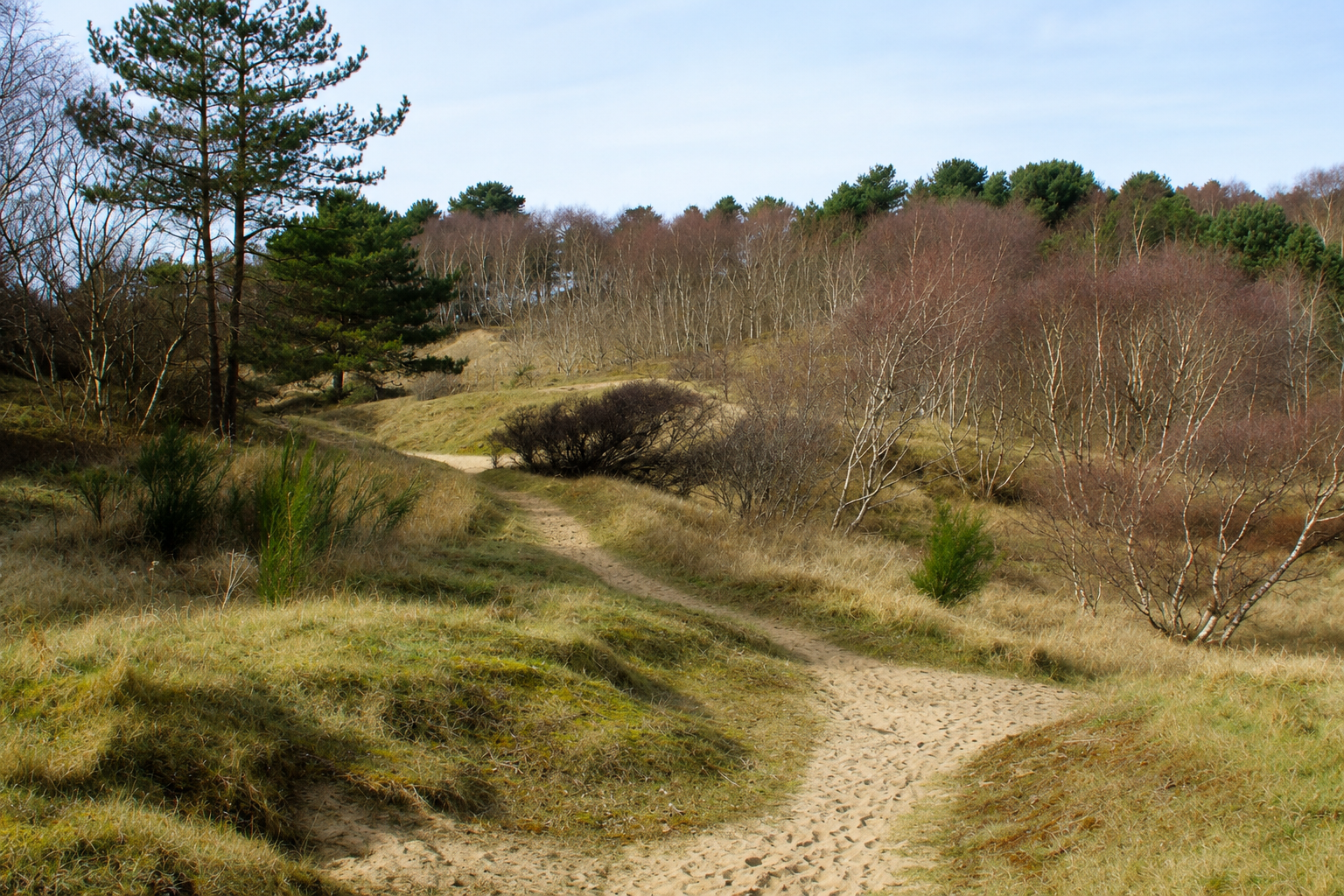
Pinewood behind the dunes, and one of the few English coasts where a red squirrel is still the squirrel you see.
Formby's pinewoods, on the Sefton coast, hold a red squirrel population on the edge of Liverpool. The woods are small enough to walk in a couple of hours. The beach is a separate walk, wide and windy, and it is not where the squirrels are.
The useful hour is the one before the car park fills. Grey light in the pines, cones already chewed, the first animal often on the ground rather than in the crown. Stand off the path and let people pass. Squirrels cross behind walkers.
The same coast has natterjack toads in the slacks behind the dunes. Their call is a ratchet at dusk in late spring. The pools are the wardens' business. A torch and a bucket are not a visit.
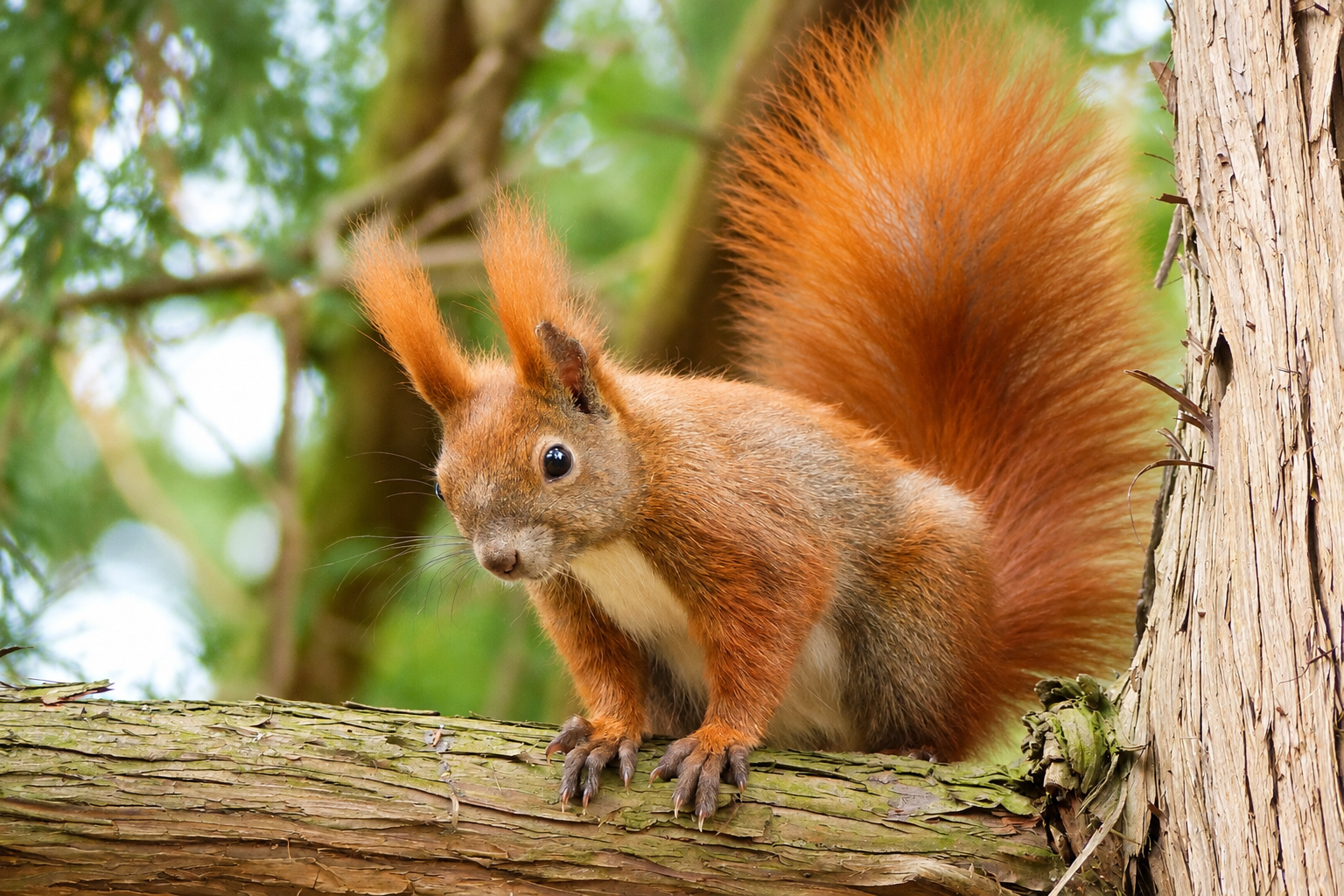
Off the path, still, for ten minutes. A circuit of the whole wood startles everything and shows you other people's dogs.
Coast and wood are not the same walk
Do the pines first. The red squirrel is the reason this coast is in the guide. Ear tufts in winter, a smaller frame than the grey, a habit of freezing on the far side of a trunk.
Do not feed them. Picnic scraps and a habituated animal on a path are how a red wood stops being a wood. Grey squirrels carry the squirrelpox that empties these places. The watching rule is to leave the food in the bag.
If you have never seen a red squirrel, Formby will fix the shape. The Cairngorms are where the same animal goes back to being wary. Both are worth it, and they are not interchangeable mornings.
The pines before the car park
The useful hour is the one before the car park fills. Grey light in the pines, cones already chewed, the first red squirrel often on the ground rather than in the crown. Stand off the path and let people pass. Squirrels cross behind walkers. A circuit of the whole wood startles everything and shows you other people's dogs. Ten minutes of not moving is the visit.
The woods are small enough to learn in a couple of hours, which is why people treat them as a warm-up for the beach. Do the pines first. The beach is a separate walk, wide and windy, and it is not where the squirrels are. Ear tufts in winter, a smaller frame than the grey, a habit of freezing on the far side of a trunk: that is the animal, and Formby is where this guide sends you to fix the shape.
What you leave in the bag
Do not feed them. Picnic scraps and a habituated animal on a path are how a red wood stops being a wood. Grey squirrels carry the squirrelpox that empties these places. The watching rule is to leave the food in the bag, including the nut you brought because a photograph of a hand would be nice. The photograph everyone already has is not the point of the morning.
The same coast has natterjack toads in the slacks behind the dunes. Their call is a ratchet at dusk in late spring. The pools are the wardens' business. A torch and a bucket are not a visit. If you have never seen a red squirrel, Formby will fix it. The Cairngorms are where the same animal goes back to being wary. Both mornings are worth it, and they are not interchangeable.